Call Anytime
+1 (123) 456-7890

Blog
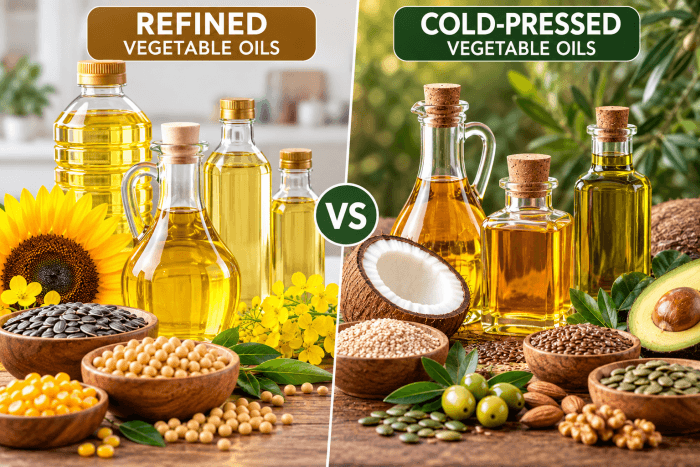
Refined vs. Cold-Pressed Vegetable Oils: Understanding the Differences
Vegetable oils are available in several forms, and the processing method can influence their flavor, appearance, aroma, and suitability for different applications. Two commonly discussed categories are refined oils and cold-pressed oils.
For food manufacturers, ingredient buyers, distributors, and commercial users, understanding these differences can make it easier to select an oil that matches a particular formulation or application.
What Is Cold-Pressed Oil?
Cold-pressed oil is produced by mechanically pressing oil-bearing seeds, fruits, or nuts without relying on high-temperature extraction as the primary method. Depending on the raw material and production process, the resulting oil can retain more of the characteristic flavor, aroma, and color associated with its source.
Cold-pressed oils are often considered when the natural sensory profile of the raw material is important. Examples include cold-pressed sesame oil, sunflower oil, rapeseed oil, canola oil, walnut oil, hazelnut oil, and avocado oil.
Because characteristics vary according to the raw material and processing conditions, buyers should review the supplier's product specifications before selecting a particular oil.
What Is Refined Vegetable Oil?
Refining involves additional processing designed to remove or reduce components that can affect the oil's appearance, flavor, odor, or stability. Refined oils are generally selected when a more neutral sensory profile and consistent characteristics are required.
Commonly traded refined oils include sunflower oil, soybean oil, canola oil, rapeseed oil, coconut oil, palm oil, peanut oil, corn oil, and safflower oil.
The appropriate choice depends on the intended application and the specifications required by the buyer.
Key Differences Between the Two
The main differences can be considered across several areas:
Processing: Cold-pressed oils primarily rely on mechanical extraction, while refined oils undergo additional processing.
Flavor and aroma: Cold-pressed oils can have a more noticeable characteristic flavor and aroma. Refined oils are generally more neutral.
Appearance: Cold-pressed oils may retain more of the natural color associated with their source. Refined oils are commonly more uniform in appearance.
Application: Cold-pressed oils can be suitable where the natural sensory characteristics of the oil are desirable, while refined oils are frequently considered for applications requiring a neutral and consistent ingredient.
Specification requirements: Commercial buyers should evaluate factors such as fatty-acid profile, quality parameters, packaging, storage conditions, and applicable specifications before purchasing.
Choosing the Right Oil for Your Application
There is no universal choice between refined and cold-pressed oil. The decision should begin with the intended use.
For example, a manufacturer producing a food where the oil contributes to the product's flavor may consider a suitable cold-pressed oil. In another formulation, a neutral refined oil may be more appropriate because the manufacturer wants the oil to perform as an ingredient without significantly affecting the finished product's sensory profile.
For industrial-scale purchasing, buyers should also consider required quantities, delivery requirements, documentation, packaging formats, and consistency between shipments.
Sourcing Vegetable Oils for International Markets
International buyers often require access to different oil varieties depending on their products and markets. A supplier with a broad portfolio can make it easier to discuss multiple sourcing requirements through one commercial relationship.
Huile Nature SARL supplies a diverse range of vegetable, specialty, refined, virgin, organic, and cold-pressed oils for international buyers. Its product portfolio includes oils derived from sources such as sunflower, soybean, rapeseed, canola, coconut, palm, sesame, avocado, olive, nuts, and various seeds.
For buyers in Asia, Europe, South America, and other international markets, product selection can be discussed according to the intended application and required specifications.