Call Anytime
+1 (123) 456-7890

Blog
What Food Manufacturers Should Consider When Sourcing Bulk Vegetable Oils
For food manufacturers, buying vegetable oil in bulk is an important part of maintaining consistent production. The choice of supplier can affect product availability, manufacturing continuity, specifications, storage requirements, and overall purchasing efficiency.
Whether a business needs sunflower oil, soybean oil, rapeseed oil, canola oil, coconut oil, palm oil, olive oil, sesame oil, avocado oil, or another specialty oil, the sourcing process should begin with a clear understanding of the application's requirements.
Define the Required Oil Specification
The first step is to identify exactly what the production process requires. Buyers should consider the oil type, processing method, intended application, and relevant quality specifications.
For example, a manufacturer may require refined sunflower oil for a neutral-flavor food formulation, while another business may specifically require cold-pressed sesame oil for a product where its characteristic flavor is important.
Clear specifications help suppliers understand the requirement and reduce unnecessary substitutions.
Consider the Intended Application
Different oils can perform differently depending on how they are used.
Food manufacturers may source oils for:
- Frying and food preparation
- Bakery products
- Sauces and dressings
- Confectionery
- Processed foods
- Plant-based food products
- Ingredient formulations
- Specialty food products
Understanding the final application allows buyers to compare suitable oils rather than selecting products based only on price.
Evaluate Bulk Packaging Options
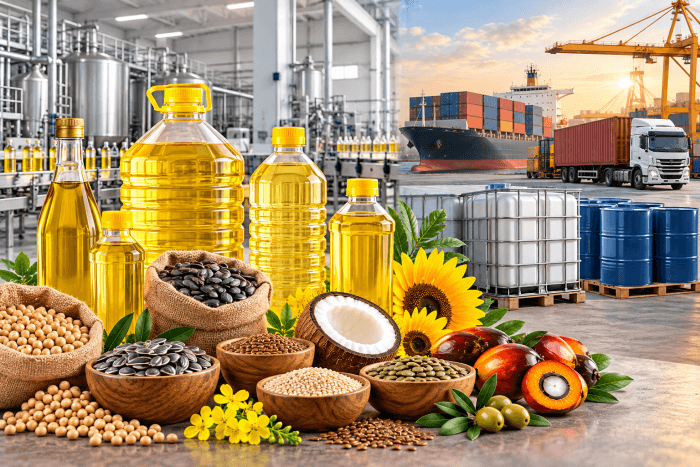
Packaging is another important consideration for commercial buyers. Depending on purchasing volume and logistics requirements, vegetable oils may be supplied in different commercial formats.
Businesses should discuss available packaging options, minimum order quantities, storage requirements, and handling procedures with their supplier before confirming an order.
For larger manufacturing operations, bulk supply can help simplify procurement and reduce the frequency of individual purchases.
Review Quality and Documentation
International food-ingredient sourcing requires clear documentation. Buyers should establish which product specifications and commercial documents are required for their market and application.
Depending on the product and transaction, buyers may need information relating to product specifications, origin, packaging, transportation, and quality requirements.
It is important to obtain current documentation directly from the supplier rather than relying on generic information about a particular type of oil.
Assess Supply Consistency
A suitable supplier should be able to communicate clearly about product availability and supply requirements. Consistency is particularly important for manufacturers because unexpected changes in an ingredient can affect production planning.
Before establishing a long-term purchasing relationship, buyers can discuss expected volumes, ordering schedules, product specifications, lead times, and shipping requirements.
Consider International Logistics
For buyers sourcing vegetable oils internationally, logistics can be just as important as the product itself.
Factors to discuss may include:
- Destination country
- Shipment quantity
- Packaging format
- Delivery terms
- Shipping schedule
- Required documentation
- Storage and handling conditions
Planning these details in advance can make international procurement more predictable.
Why a Diverse Supplier Portfolio Can Help
Manufacturers that use several types of vegetable oils may benefit from working with a supplier that offers a broad portfolio. Instead of searching for a separate source for every oil requirement, buyers can discuss multiple products with one supplier.
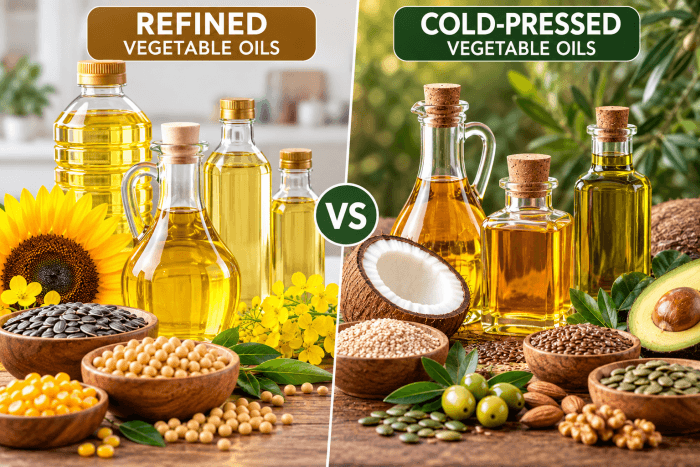
Huile Nature SARL offers a diverse selection of vegetable and specialty oils for international buyers, including refined, virgin, organic, cold-pressed, and other oil varieties. The portfolio serves businesses looking for oils for food manufacturing, ingredient sourcing, commercial food applications, and other uses.
Sourcing Vegetable Oils Across International Markets
Huile Nature SARL works with international buyers across markets including Asia, Europe, South America, and other regions. Buyers can discuss their product requirements, intended application, quantities, and supply needs when evaluating suitable oil options.
For businesses purchasing vegetable oils in commercial quantities, choosing the right product is only one part of the process. Clear specifications, reliable communication, appropriate documentation, and practical logistics should all be considered when establishing a supply relationship.
Bulk vegetable-oil sourcing should be approached as a complete procurement process rather than a simple price comparison. By defining the required specification, understanding the application, reviewing documentation, and discussing packaging and logistics in advance, food manufacturers can make more informed purchasing decisions.
A supplier with a broad product range and an understanding of international requirements can also simplify sourcing when a business needs multiple vegetable oils for different applications.